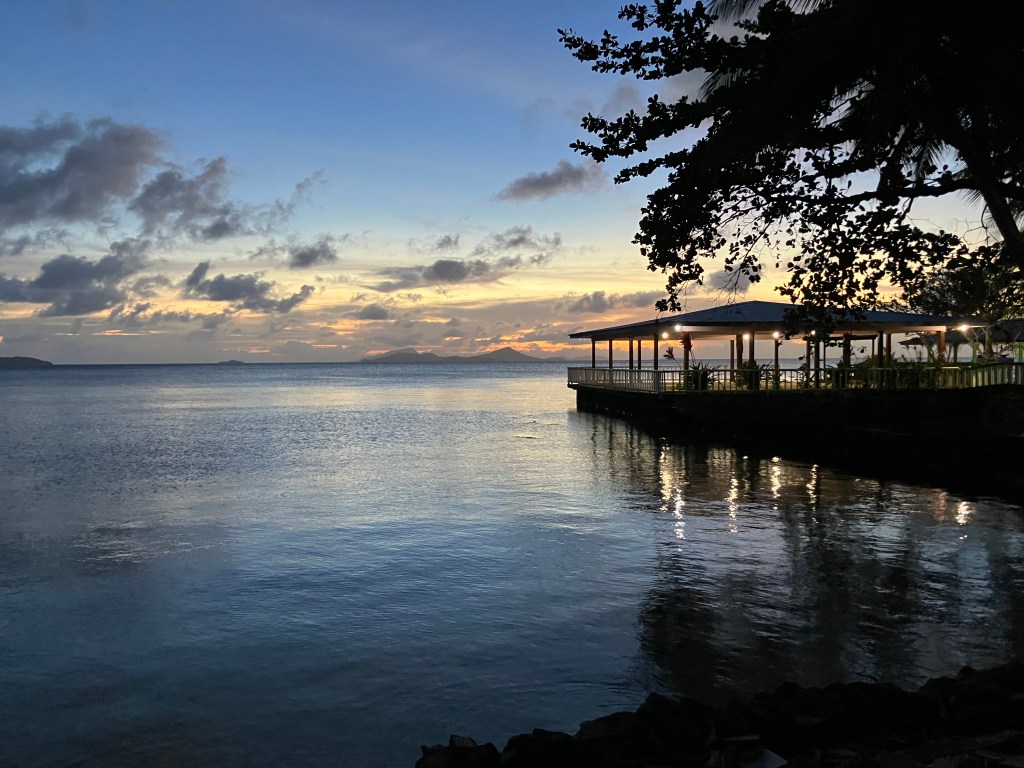
Hi everyone, this an update on my time in Chuuk, one of the Federated States of Micronesia. I imagine that most of you will need a geography lesson at this point, just as I did when I first started researching and planning this trip! The Federated States of Micronesia (FSM) is in the central to northern Pacific, somewhere in between the Philippines and Hawaii. As the name suggests, the country consists of several states, one of which is Chuuk. All of them are made up of many thousands of islands and atolls, mostly uninhabited, and vast expanses of ocean. It’s a developing country and Chuuk is one of its poorer states, with more than 40% of households lacking running water. The native Micronesian people have their own language, Chuukese. It was certainly a big change from Guam, which is so westernised and developed.
However, I’m getting ahead of myself. I first of all need to explain that United Airlines operates an “island hopper” flight between Hawaii and Guam several times a week, which is the only flight serving certain very remote locations in the Pacific, including some US military bases. I’ve known about this flight for quite a while, and have always wanted to take it. Guam to Chuuk was the first of several legs I’ve booked. In many ways, it operates like a normal flight, apart from the fact that it has several stops along the way and allegedly has a mechanic and spare parts on board due to the remoteness of some of the locations. At the airport in Guam, it was obvious that a lot of local Pacific Islanders were packing up goods and merchandise, as much as could possibly be carried, for transportation to more remote regions. I believe that this flight ceased operating temporarily during the pandemic, which had a devastating impact on the islands it no longer served.
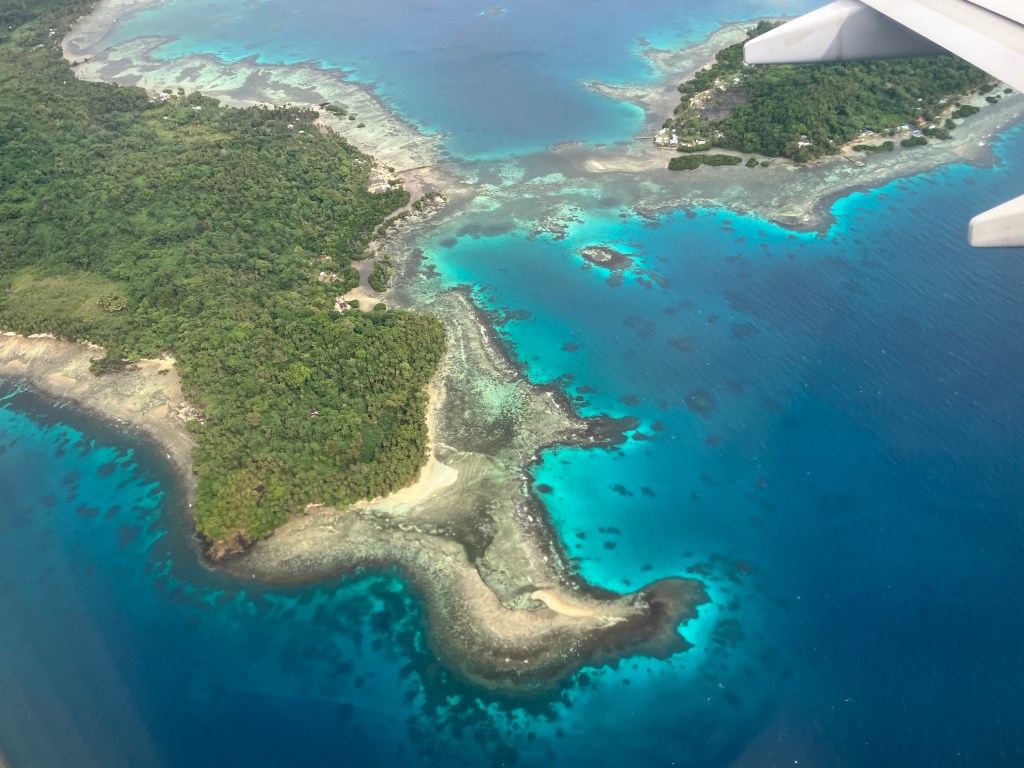
Anyway, with that context out of the way, I landed at the tiny airport on Chuuk and was picked up, along with only a handful of other tourists, and taken to the Blue Lagoon Beach Resort on the southern tip of the island. Chuuk is a very small island with only a couple of viable hotel options. The hotel I chose certainly had its idiosyncrasies (as one of the Australians who was also staying there put it!) but it was good overall. The food in particular was a pleasant surprise in terms of quality and choice, given the remoteness of the location. It’s possible that the other main option (called Truk Stop), which is closer to the main town, may be just as good if not better, but I certainly can’t complain. On the drive from the airport, which took about half an hour (twice as long as it should have done due to the poor state of the roads), we saw real poverty, including lots of children, dogs and pigs running around in the streets, and also a surprisingly large number of abandoned cars in various states of decay. The location of the hotel was incredibly picturesque, surrounded by the sea on three sides, with lots of coconut trees and a couple of Japanese war relics on the beaches.

Most of the small number of visitors per year come to Chuuk to dive. The reason for this is that the Japanese occupied this part of the Pacific for a significant part of the early 20th century. Chuuk Lagoon was the site of a huge bombardment by the Americans called Operation Hailstone in 1943. As a result, dozens of Japanese ships, as well as planes, submarines and other craft, were sunk in the lagoon and over 5,000 men were lost. The ships and many of their artefacts can still be dived today. There is a long-established and rather famous dive shop at the resort which can supply pretty much everything a diver could want (apart from suncream or aftersun!). There’s a museum on site too, which opens on request, containing many more artefacts from the wrecks. It also covers some cultural exhibits and the life story of the founder of wreck diving in Chuuk, who established the resort and diving shop (which are still owned and run by his family).
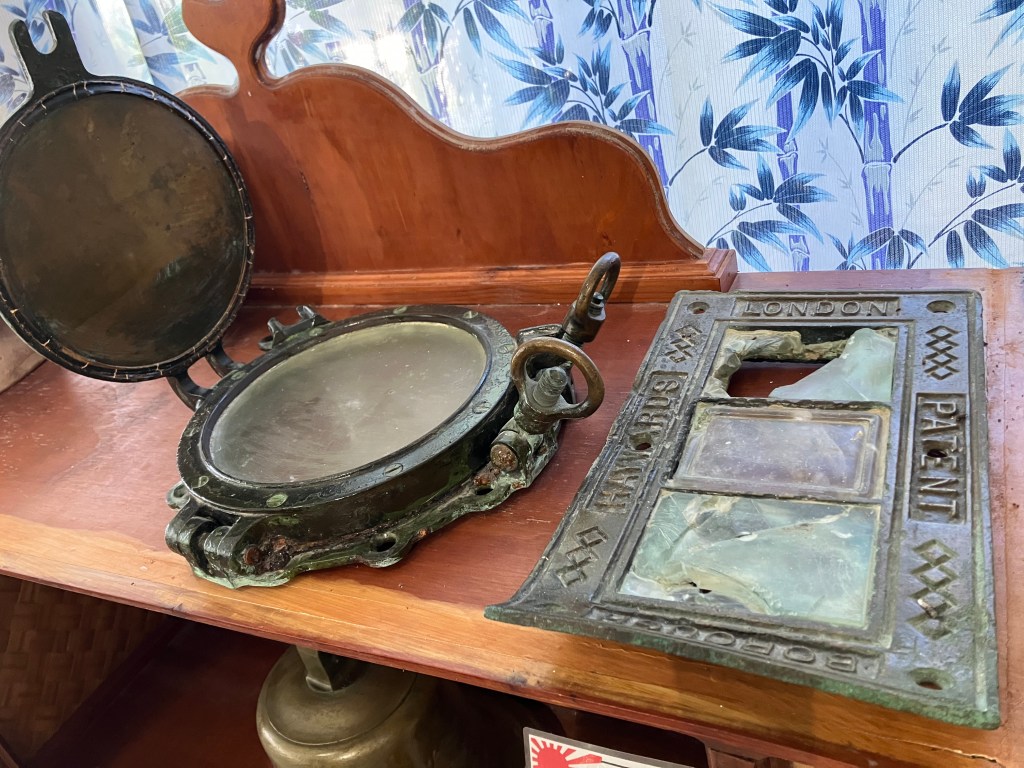
I didn’t dive on my first full day, due to the need to recover from my severe sunburn, but I felt well enough to dive the day after that and really enjoyed the three dives I did. Although most of the ships have decayed a fair bit in the tropical waters and most of their artefacts have been removed, there’s still a lot to see and I agree that this is the wreck diving capital of the world. The wreck diving course I did in Barbados in October last year served me very well and this is definitely not diving that I would recommend to the inexperienced or those who need a lot of hand-holding. We went out on quite a basic boat and were expected to be responsible for our own safety.
The guide and driver, who were local dark-skinned Micronesians, had an amazing ability to find the location of a wreck immediately without any navigational equipment. Once found, the guide would jump into the water wearing a mask but no scuba gear, swim down about 3m and find the buoy to tie the boat to! Some of the things I saw on the three wrecks I dived were medicine and sake bottles, beautifully patterned plates, perfectly preserved shower stalls with ceramic tiles, sinks and urinals, lanterns, bicycles, engine rooms and much more. We also saw amazing wildlife on and around the wrecks including eagle rays, extraordinarily colourful tropical fish, bright pink shrimp, and my favourite – an octopus in its lair! I don’t have any photos from the diving itself but here are a couple from a break we took in between dives:

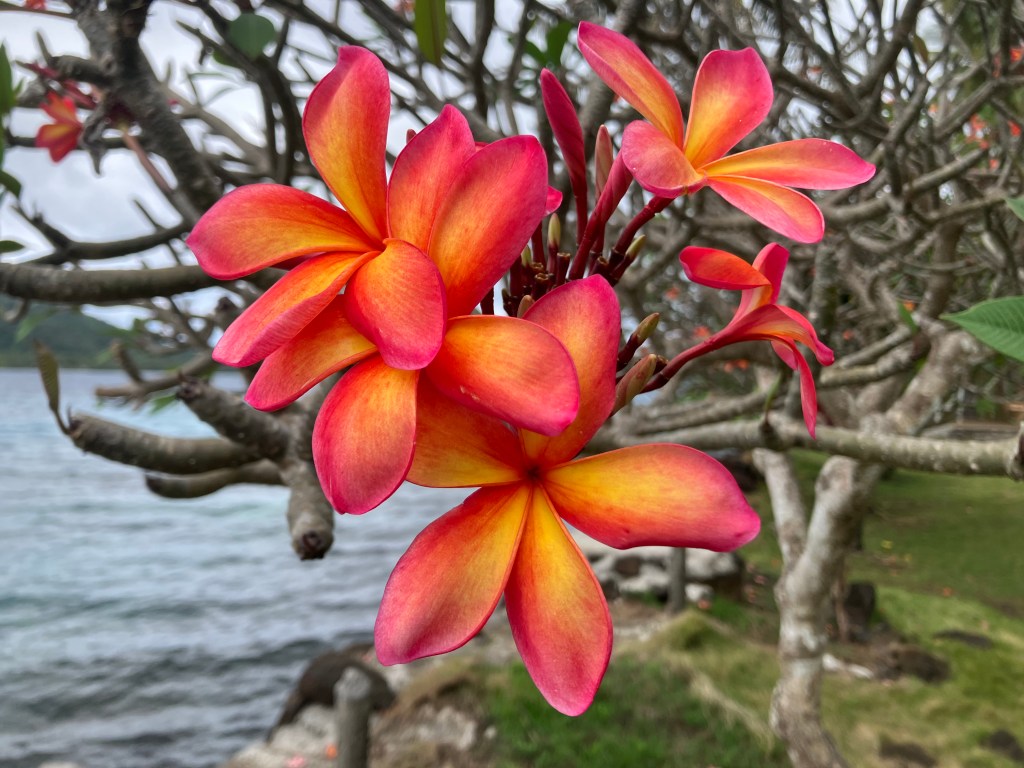
One of the nice things about staying in a resort that’s pretty much dedicated to diving is that everyone is there for the same reason and it’s easy to make friends. I met a nice couple from Alaska, as well as three Australians who were advanced technical divers. It was really fun diving and having meals with them, and chatting about diving generally and what we’d each seen on the wrecks. An American called Michael was keen to see more of the island and invited me to join him on the final day. You have to imagine that this is not the sort of place where you can just rent a car or book a tour. It’s really quite difficult to pre-organise anything and there’s not much to see and do on such a small island.
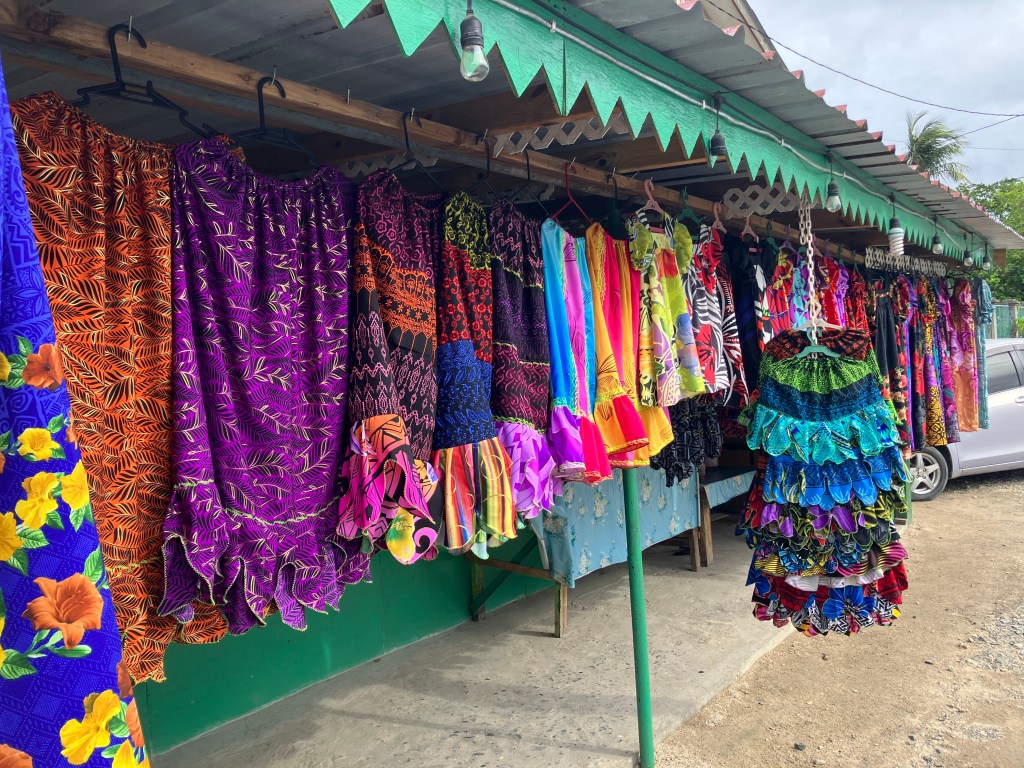
However, as we were walking through the main street of Chuuk, it became clear that Michael had already met and befriended quite a few locals. The manager of the local Yamaha boat engines shop very kindly offered to drive us to some caves for sightseeing. We hitched a ride on the back of his truck, along with a local woman who worked as a mechanic at the shop, and went up to see the caves. It appeared that they were blasted into solid rock by the Japanese and used as a defensive base, complete with an enormous gun which still looks out over the bay towards the airport.

It was a special experience chatting to some locals, who spoke a little English, and getting to hear a bit about their everyday life. Our guide, Kinseria, told us that she’s one of seven children, which isn’t unusual on the island. I’m now friends with her on Facebook, which is an amusing collision of our two cultures. I was grateful to Michael, as well as to the locals we met, for showing me a different side of the island that I wouldn’t otherwise have seen. I left Chuuk yesterday morning and flew one state further east to Pohnpei, where I will be for the next four days.
That’s all for now. Please let me know if you have any questions or if I’ve missed out anything important.
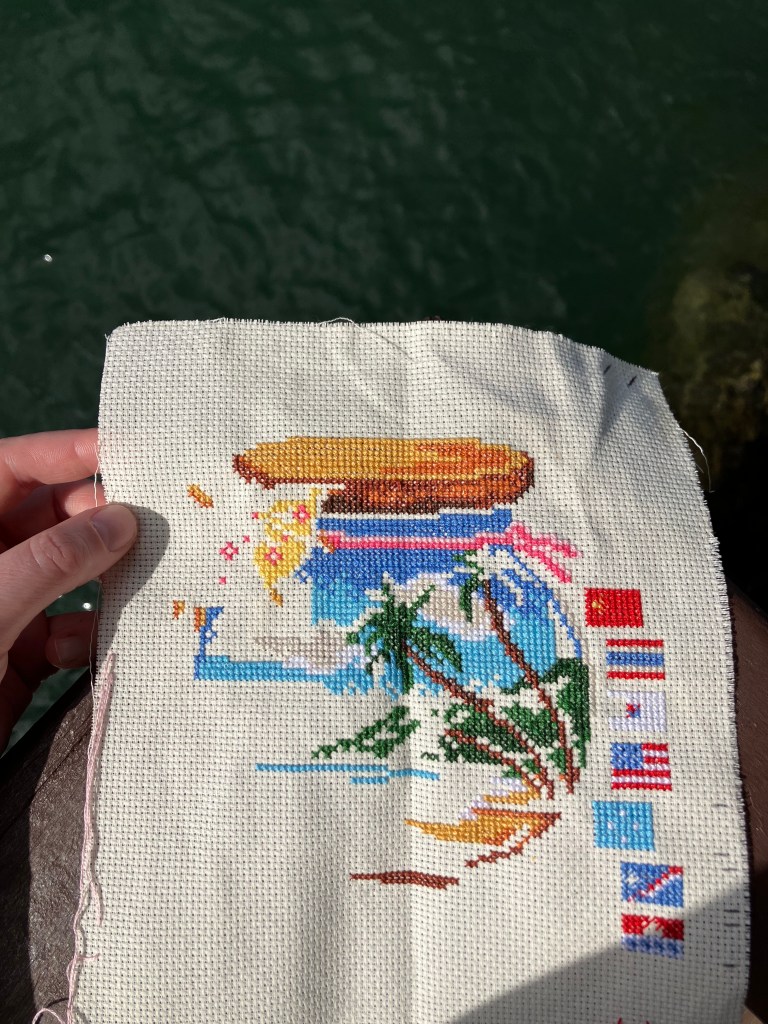
Cross-stitch progress update
 Helen the Liege