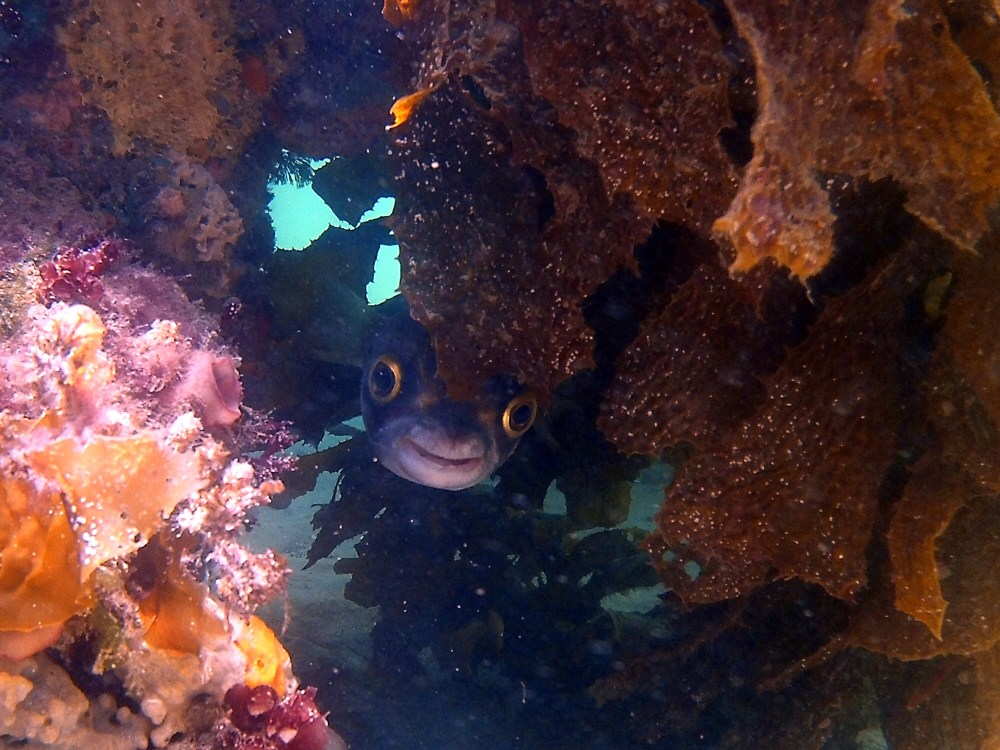
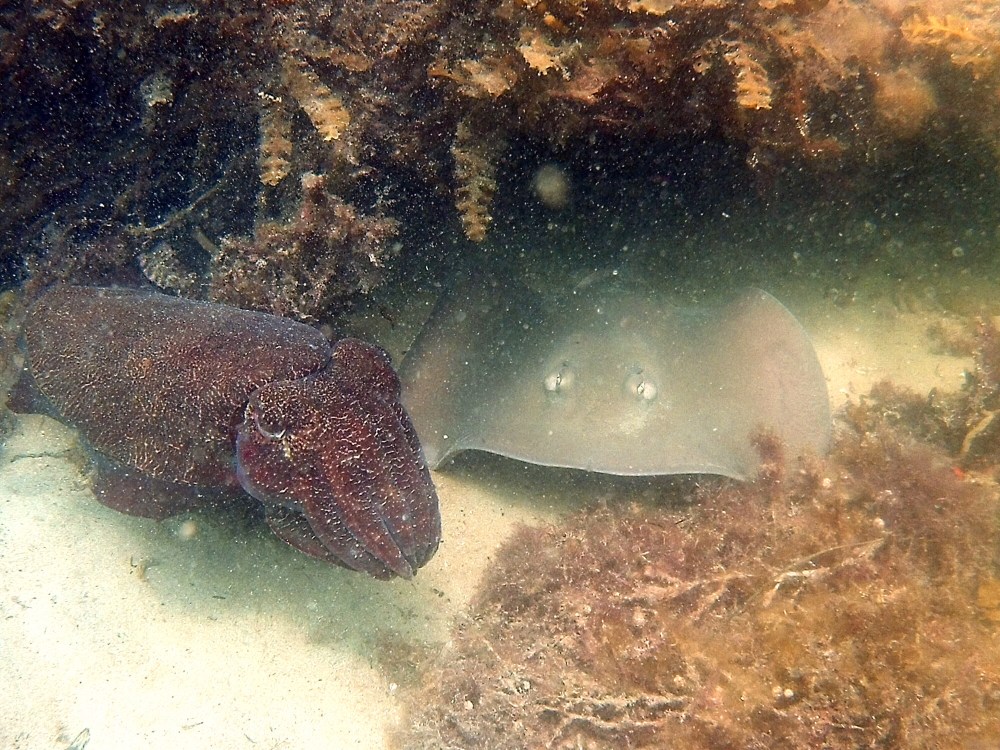
Two days ago, I took a trip to the southern peninsula of Melbourne to do a dive. I wanted to add this to my diving list because of the possibility of seeing sea dragons, and the fact that 80 or 90% (I forget which) of species found in southern Australia are unique to this area. Due to some issues with public transport – it takes a couple of hours to get to Portsea from central Melbourne, and part of the journey required the dreaded rail replacement buses – and staff illness at the dive shop, my dive was postponed from 8.30am to 1pm. This meant that, due to the tides, we couldn’t dive in the sea dragon area and had to go to a nearby pier instead. All of this mattered a lot less than you might think! The dive was still fascinating and we saw a huge variety of marine life around the jetty and pontoon, despite the very shallow depth of only 5 metres. The main highlight for me, because I love seeing cephalopods more than anything else, was an Australian giant cuttlefish about 40cm long. These creatures are intelligent and curious, and this one was easily tempted out of its cave. It put on a colour display for us, changing from brown with white flashing dots to a deep red and back again. We also saw a lot of stingrays and some of the largest pufferfish I’ve ever seen. Diving so much in such a short period of time has been wonderful and I feel more relaxed and confident each time I do it. I’m also getting more used to my underwater camera, and I hope you’ll agree that these pictures are some of the best yet.
Pufferfish
Australian giant cuttlefish and stingray
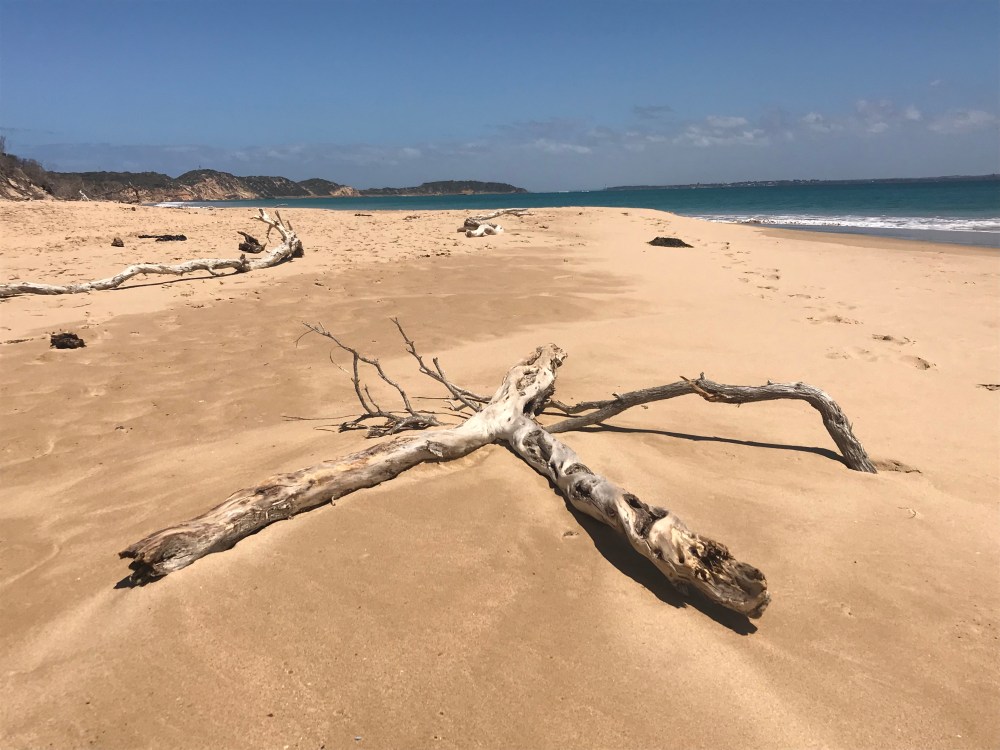
Before and after my dive, I had time to explore the national parks near Nepean Point, at the end of the Mornington Peninsula. The dive shop kindly lent me a bike free of charge, and – despite not having ridden a bike for nearly a decade – I succeeded in cycling gently uphill to the quarantine station, which was used to quarantine ships, passengers and livestock for over a century. There’s quite a lot of free information there about the station, its operations and the people who were quarantined. I had no idea it was there until I visited, so it was an interesting surprise! I then cycled past the cemetery, which was used to bury some of those who died at sea or in quarantine, and a stunning beach and lookout point. The skyscrapers of Melbourne were just visible in the distance. After my dive, I walked across the narrow strip of land to what is technically the Southern Ocean, near the spot where Australian prime minister Harold Holt went missing and was presumed drowned in 1967. The enormous waves crashing on to the shore here made a nice contrast with the sheltered bay area where I did my dive. This is a beautiful and quiet part of Melbourne that was well worth the journey to visit.
Yesterday I made a spontaneous day trip to Hobart in Tasmania. As previously mentioned, this was inspired by a conversation I had with an Australian man on the train from Sydney to Melbourne. I booked almost the first flight out and almost the last flight back, so it was a very long day but totally worth it. I began with a snack of freshly cooked prawns in Hobart harbour (absolutely delicious!) and then caught the special ferry to the Museum of Old and New Art (MONA), which was built by an Australian gambling millionaire. I’ve heard MONA described as a “subversive adult Disneyland”; it’s very difficult to describe to someone who hasn’t been, but I’ll give it a go. You approach the museum from the sea in a custom-designed boat full of statues and graffiti, ascend 99 steps, pick up an interactive guide that tells you about each exhibit as you move around (there are no labels on the walls), descend about three floors, and then slowly make your way back up while you enjoy the museum. There is a lot of art to see and some of it is very rude – I was surprised by how many visitors had their children with them! Some of my favourite exhibits included the hilarious animated skeletons in flagrante, the “Cloaca Professional” which creates “human” waste from food and digestive enzymes, the falling water which displays words from Google search trends, and the beautiful light effects created by the cube shown below (it’s a bit of an optical illusion, as the lights inside rotate but the cube itself does not).
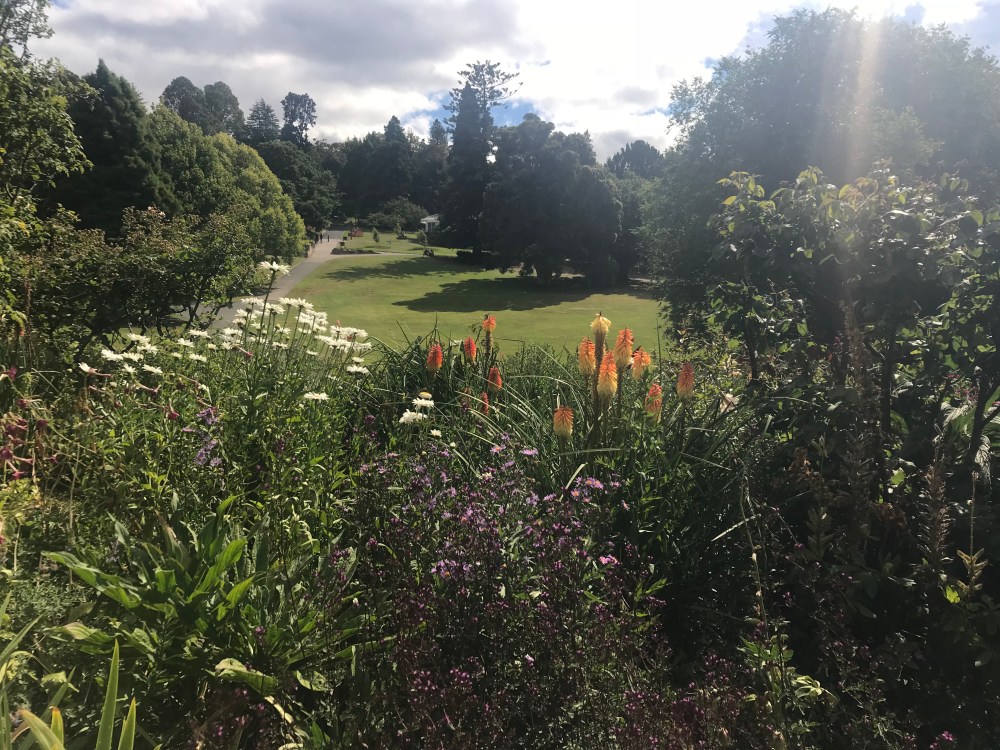
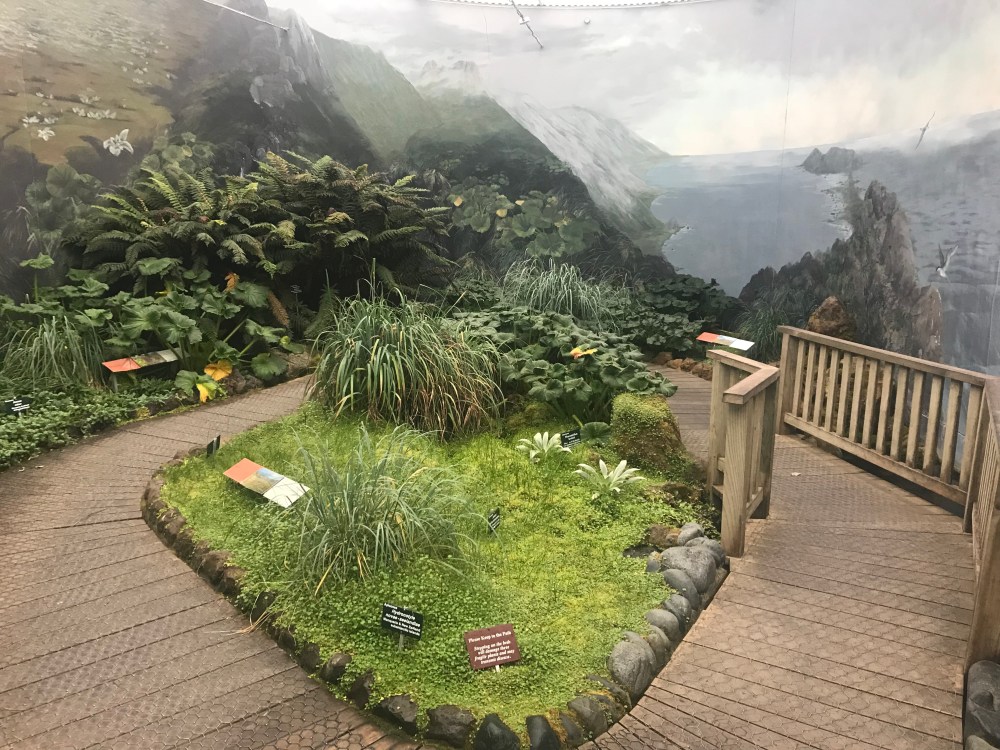
In the afternoon, I visited the Tasmanian Botanical Gardens. On the way there, I walked past the site of Beaumaris/Hobart Zoo, which is famous for having had the last captive thylacine (Tasmanian Tiger), which died there in 1936. The zoo closed the following year due to financial difficulties. It’s incredible that the ruins of the polar bear and leopard exhibits can still be seen; they look barbaric by today’s standards. It’s also incredible that the land hasn’t been built on in all the time since the zoo closed, though I understand the Navy used the site for several decades. Moving on to the botanical gardens, Sydney’s were good, but Hobart’s were breathtakingly beautiful – and also free! Particularly lovely areas included the lily ponds, a Japanese formal garden, and a colourful mixed border and roses area. There are also some nice wooden and water sculptures, and a couple of glasshouses. The gardens are famous for having the only sub-Antarctic plant house in the world. Most of the plants in there are quite small and dull, due to the harsh conditions, but it was interesting to stand in a building cooled to 9 degrees Celsius and listen to the sounds of the Antarctic all around. By the time I’d finished looking around the extensive gardens, it was time to head back to the airport, after an absolutely brilliant day – definitely one of the best yet.
Sub-Antarctic house
I’m off to the Philippines today for the last stage of my trip. It’s come around so quickly!
 Helen the Liege
Wow – what a fabulous day! Love the cuttlefish photo – extremely clear. Lovely for you to see the colour change; quite an experience. The MOMA sounds amazing – and the botanical gardens breathtaking. Nice to do a bit of cycling too! Great blog entry, thank you for sharing. You’ve brightened up a dull, cold day here!
LikeLike